The causes behind the causes…
My focus in this case study was on low socioeconomic groups, including the Indigenous population in rural and remote areas. It was clear that these areas contain a gross disporotion in ill-health, suicide rates and limited access to health care, and this was particularly harsh in the Indigenous population.
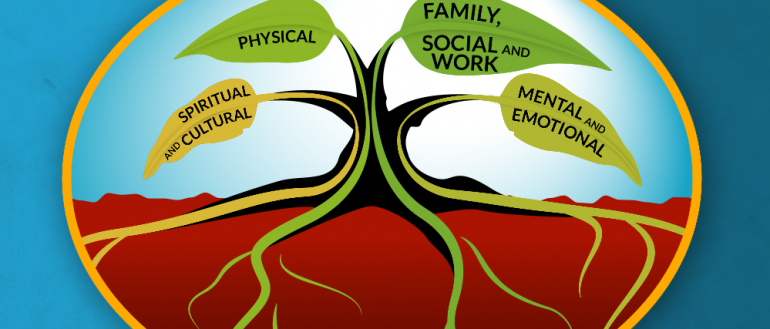
This is hardly surprising though. Academically, there seems to be overall consensus on disadvantage playing a key role in Indigenous ill-health in rural areas. For example, according to Community Affairs References Committee, the Indigenous population have a greater likelihood to die from a mental illness, have the highest rates of heart conditions, high blood pressure and cholesterol, while too having the highest rates of poor/overcrowded living conditions of all socioeconomic groups within Australia. (APH, 2018).
And yet, when actually thinking about the discourses behind health policies, they tends to disregard this connection, and at most, only work to buffer people against oppression and ill-health.
What then seems most urgent is the call for a change in discourse about ill-health on both micro and macro levels. Indeed, the “individualism of contemporary neoliberalism” (Gray 2011 p.10) discourse needs tending to in order to target the systematic inequalities which reproduce disadvantage and subsequently produce ill-health.
This is where things become most difficult. Social work practice often focuses on the individual client, yet is it not also true that one of the most foundational aspects of social work is social justice? With this undeniable recognition of socioeconomic inequalities in health, social workers are called to move beyond individual client based work, instead seeing ‘client based work’ for the tangible expression it is, as something which also means working against the larger systems which inform individual ill-health. Should we not focus on strategies for dealing with the large scale oppressions and create space for advocacy? Haven’t we talked enough?
Gray. M, (2011). Back to basics: A critique of the strengths perspective in social work. Families in Society. Retrieved from https://www.academia.edu/1450608/Back_to_basics_A_critique_of_the_strengths_perspective_in_social_work
Accessibility and quality of mental health services in rural and remote Australia. Parliament of Australia. (2018). Retrieved from https://www.aph.gov.au/Parliamentary_Business/Committees/Senate/Community_Affairs/MentalHealthServices
Menzies, (2019), school of health research. Retrieved from https://www.menzies.edu.au/page/Research/Indigenous_Health/Mental_health_and_prevention/Mental_Health_and_wellbeing/Publications/

 Eva's Blog